Cozy Catastrophe

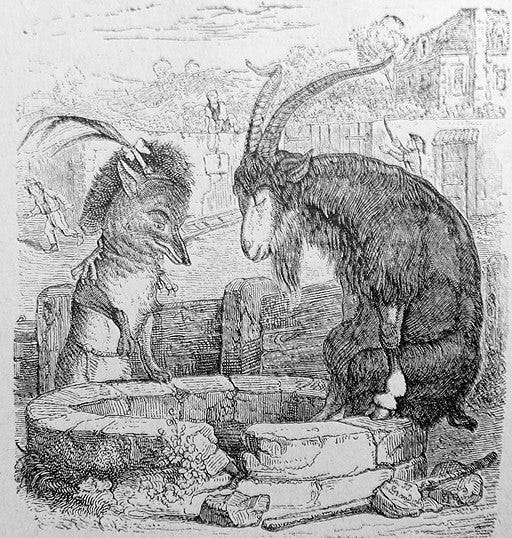
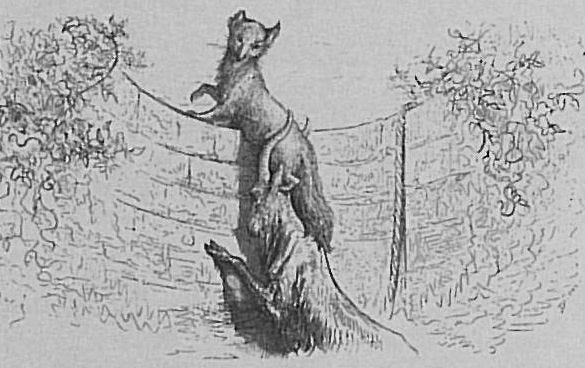
You’re healthy until you’re not. That’s how I could sum up the previous year. As for writing, the opening line from Adam Mickiewicz’s adaptation (via Jean de la Fontaine) of the Aesop fable about the fox and the goat keeps ringing in my head: Już był w ogródku, już witał się z gąską. English versions of the fable that I’m finding are of no help here — they all seem to begin with the fox already in the well. Mickiewicz has you look at the preceding instant: here is the fox, almost in the garden, almost welcoming the goose… Of course, because I first heard the story as a child, the nature of the “welcome” the fox wanted to give the goose took a few years to truly sink in. Children love language differently than adults do. Mischief needs to ripen in them to open their eyes to the dark “welcome” waiting in the words. And that, too, relates to writing poignantly — to getting and not getting it down. I almost welcomed several drafts but, overwhelmingly unwritten, they bounded away where they live on as pure ideas, that most perfect and elusive kind of writing, leaving me in the well.
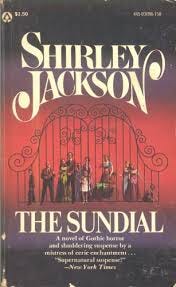
Every year I wonder what books will remain unfinished by December 31st and, in particular, what I will end up reading at this hinge between two calendar years. This time, it was Shirley Jackson’s Sundial and John Wyndham’s The Day of the Triffids. On my mind was the description-accusation I’ve seen leveled against Wyndham — that he was a writer of “cozy catastrophe.” I wonder what would be the opposite to how Wyndham explores the unfolding of cataclysm. A Roland Emmerich-style grand cinematic depiction of a clearly definable disaster, with people yelling clear commands to each other over an unmistakable noise of explosions? In that case, what do you do with ends of the world that arrive cloaked in yet unknown shapes, dancing their way to you at a slow pace, with breaks and fake respite?
In Jackson’s novel, a feverish desire for an end of the world — whose aesthetic, according to the hints dropped by Aunt Fanny, anticipates Roland Emmerich — overwhelms a family of unique characters in a unique house, who then strive to invite it. ‘What is this world?” asks the sundial on their property, though perhaps even before they indulge in burning the books from their house library, none of them would think to reach for Chaucer. From Ruth Franklin’s biography I learned that Jackson’s own house was overflowing with books collected by her and her husband, so I imagine the perverse book cull in the novel as a symbolic crime against the author’s own library, an attempt to gain mastery over the world growing inside her own house.
In The Sundial there are several characters who seek such absolute mastery over the house in anticipation of that house becoming synonymous with the world. Mrs. Halloran rules it already, skillfully breaking the wills of anyone who tries to defy her under her own roof. Then, there is the prophetic Aunt Fanny who most of the time plays the part of Mrs. Halloran’s reluctant vassal. High up in the attic of the immense Halloran mansion she has hidden a replica of her childhood home — the house before the house with the sundial, preserved in miniaturized form in the one area of the property that seems to lie in her sister-in-law’s blind spot. Finally, there is little Fancy, Mrs. Halloran’s granddaughter. Her name echoes Aunt Fanny’s and, like her aunt, she is a daughter of a ghost of a Halloran man (all the men in this novel seem to be ghosts, whether they are living or dead). Fancy has a dollhouse, which — as she announces early in the story — she plans to smash once she takes over from her grandmother as the head of the family.
We learn that there is a city nearby and, even closer, a village, which we get to visit with Aunt Fanny. The setting is reminiscent of the village from “The Lottery” — propriety matters because power does — but everything happens before any stones are cast. A hail of stones might bury them (aunt Fanny could argue) but this story is all about how the approach of the ending lives and expands in the minds of the inmates of the Halloran mansion, and about who has the power over whom in such a state of anticipation.
While in Jackson’s novel the fear of the end is invited and shaped by both desire and fear of power and control over minutiae, in Wyndham it is the cataclysm that is real and power is an illusion long before the dramatic part of the story begins. The vision of the end is terrifying in The Day of the Triffids — but triffids, the strange plants that roam the collapsing world — had long been terrifying, only the terror had been tamed because the plants were supremely useful. In the midst of cataclysm, Wyndham’s characters repeat throughout the novel that the terrifying plants are a blessing in disguise. The day of the triffids is less scary than the night of the mysterious green lights that blinded most of humanity or the outbreaks of plague that follow in later chapters. The threat triffids pose protects the survivors from the worst of human designs upon one another. The other attempts at domestication and control that follow in the novel alternately bring solace and new terrors.
I wonder about this accusation of coziness leveled against Wyndham – about the moments of respite his characters stumble into (empty apartments and stores with wares for the taking) and create for themselves (houses in the countryside, vegetable gardens).
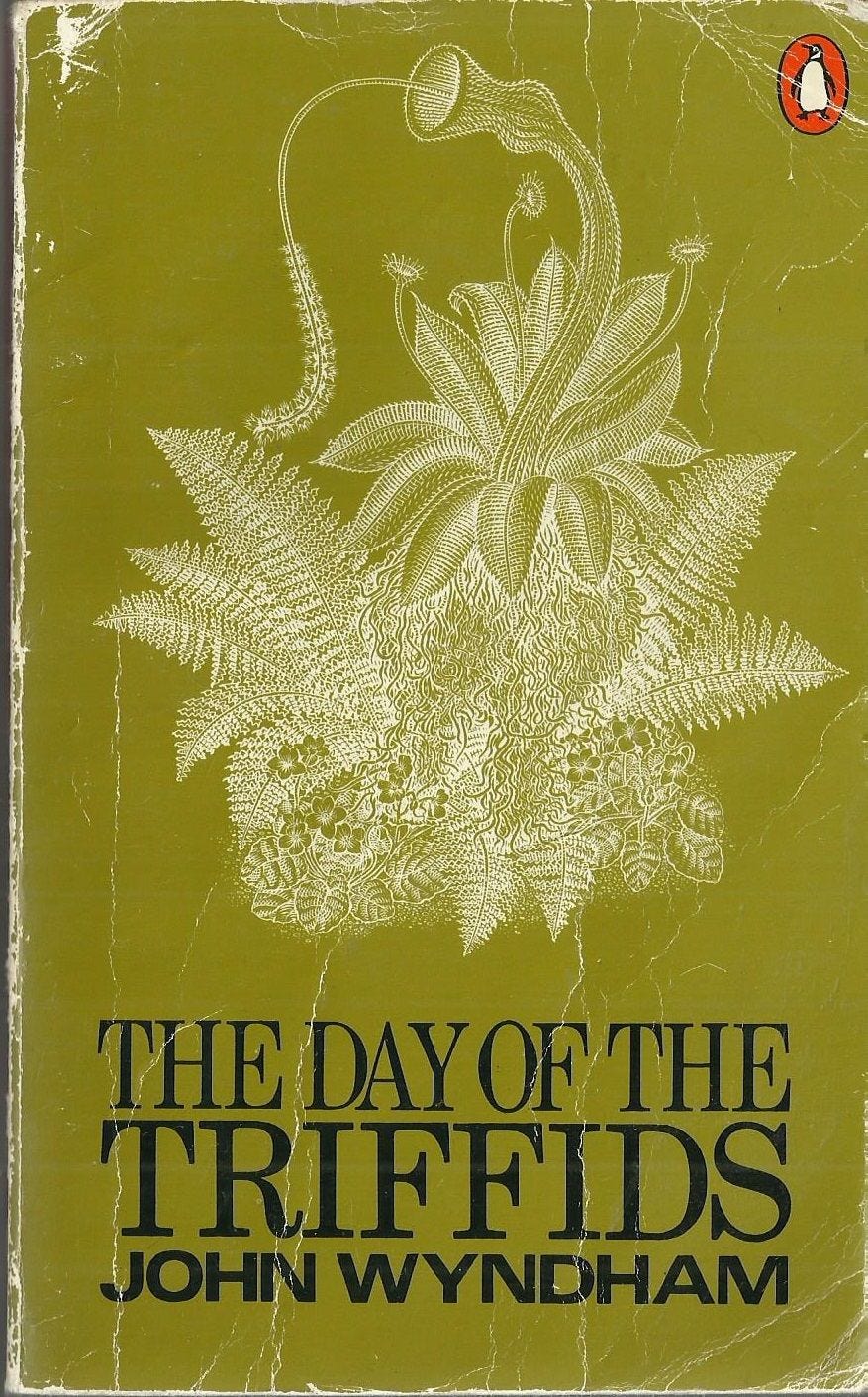
Before Triffids, I read Wyndham’s The Kraken Wakes, where I found the characters’ attempts to hold on to a place — some place — they could call home incredibly moving, even when it seemed perilous and pointless. The slow, unevenly paced but ultimately unstoppable collapse of a world whose seas were becoming uncrossable struck me as plausible rather than cozy. In Triffids, Wyndham intertwines catastrophes: mass blindness, triffids, plague, the terror of new collectives to which one might be conscripted under duress rather than by choice. If the survival of culture – not just bare survival – requires leisure, is feudalism an apt approach to assuring leisure for some? (I won’t say how and when exactly the novel poses this question – my intention isn’t to spoil anyone’s reading.) If culture needs leisure, what if cultivating mutual care requires first inviting a sense of “coziness”? One way of reading Triffids, I think, is as a catastrophe of care. Care is in danger of disappearing the more isolated and helpless human groups become in the triffid-overgrown landscape – and it is in danger of being extinguished by coercion into larger structures in which some would be enslaved. The novel keeps raising the question: if most of humanity were to suddenly become incapacitated, would the able-bodied minority take on the burden of care? Could they? And if they could, under what conditions?
In Triffids as in Kraken there is a great deal of waiting and hoping for help from the benign and powerful. In these books, both published in the early 1950s, there is a palpable link between this waiting and the still recent World War II – there’s a lot of waiting for American aid. Pinned on it is the hope that somewhere, the world that collapsed for the characters has survived intact and can serve as a blueprint for rebuilding. In both novels, this hope serves as little more than a distraction.
I welcomed the new year watching Ernst Lubitsch’s To Be or Not to Be. I had only seen the 1983 remake in which Mel Brooks and Anne Bancroft mangle the Polish language hopelessly (though with some fun dancing). For all their efforts (and the musical numbers, which the original does not have), the remake fails. There is a point in time where “cozy catastrophe” is still possible. Once it passes, there is only catastrophe to be regarded in retrospect, coldly, without the long-gone coziness of not knowing.
And another kind of magic in the movie: languages flow into each other seamlessly. Polish is English and so is German. The characters playing Polish actors lie skillfully in German, then perform Shakespeare in English for a British audience, and no one bats an eye. All is possible; the good survive; hope lives.
In 1983 no such magic could be embraced without it being a terrible and cruel lie.
The Warsaw in Lubitsch’s movie reminded me of the Warsaw from Czesław Miłosz’s war poems. In my first encounters with Czesław Miłosz’s poetry, which happened in school, I remember being shaken by his early work – the catastrophist poems he wrote before the war. What might have been a young poet’s experimentation in bleak visions, to a child reading the words far in time on the other side of the atrocities, seemed prophetic.
Now it’s lines remembered from “A Song on the End of the World” that make me fearful. Here is how that poem ends:
As long as the sun and the moon are above,
As long as the bumblebee visits a rose,
As long as rosy infants are born
No one believes it is happening now.

Only a white-haired old man, who would be a prophet
Yet is not a prophet, for he’s much too busy,
Repeats while he binds his tomatoes:
There will be no other end of the world,
There will be no other end of the world.
Warsaw 19441
The news: choose your own catastrophe. In Ukraine, in Minneapolis, no cozy unknowing. The world of four years ago, three years ago, two years ago, is quickly receding into a sense of cozy catastrophe you could perhaps read about. “Here he was, almost in the garden, almost welcoming the goose,” and I can almost see the garden in my mind’s eye. I might be the goat who arrives later or I might be the lucky goose.