
Kitsch and Graphomania!
Szymborska, Kundera, Taylor, and why write at all

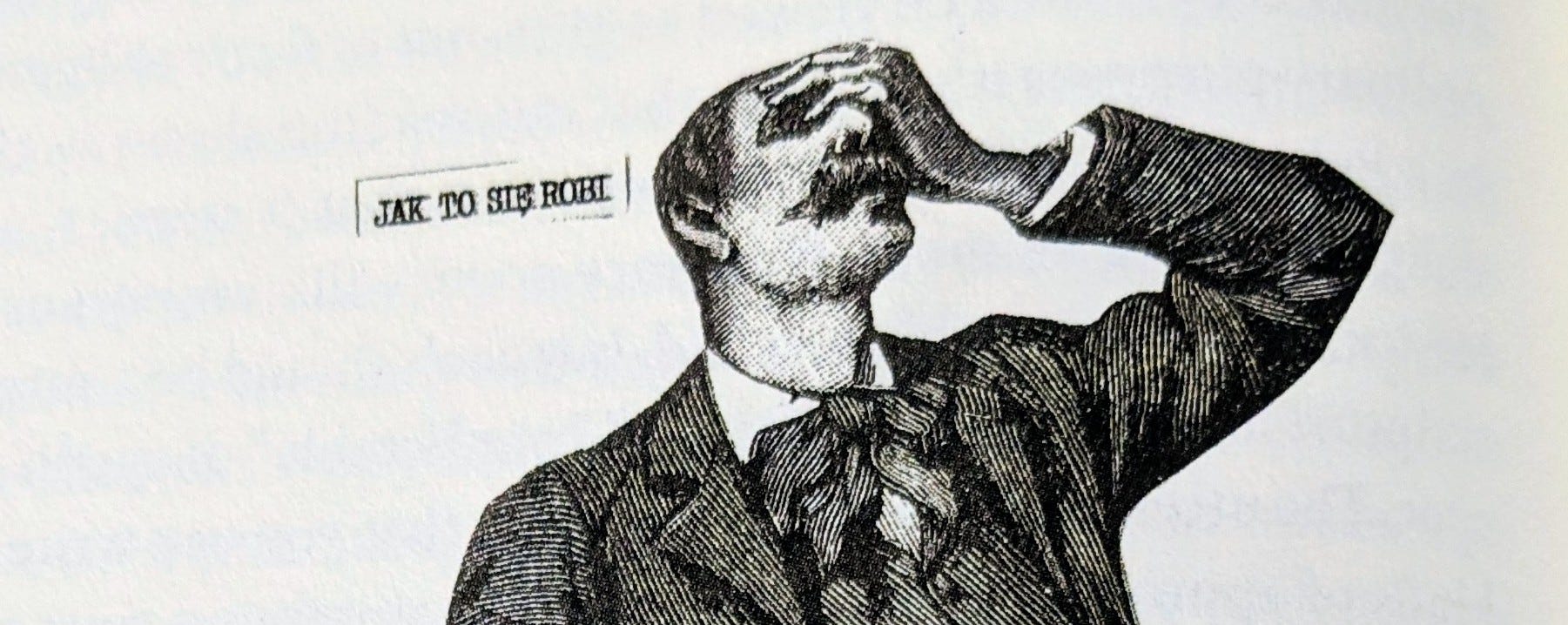
It’s a great mystery to me why New Directions decided to publish an English edition of selections from Wisława Szymborska’s most notorious — and anonymous! — column, Poczta literacka [Literary Post]. Please don’t get me wrong: Clare Cavanagh’s translation is great, and Szymborska’s collages add another dimension to this unusual book. But do not let the innocent-sounding title of either the original or the translation deceive you. I have approached this slender volume cautiously, only ever reading excerpts from a page or two now and then. Why?
Realizing why — and I say this as if from the analyst’s couch — allowed me to finally read the book all the way through. It’s a collection of replies to aspiring writers who sent their manuscripts to the magazine Życie Literackie [Literary Life], entrusting their literary fate to its editors. Szymborska, as the sole woman on the masthead, opted for the royal we in her replies, which, I imagine, only amplified the impression that the response was arriving straight from Mount Parnassus. This was decades before her Nobel win. Knowing the name of the deity that smote them might have only made a difference to the letter writers inasmuch as it could have enabled revenge. The unsigned wit alone, however, reads like a lethal weapon in most cases collected here. Revealing the true identity of the responding “we” adds a posthumous flourish to the original kiss of death.
I read each letter to the writer and shudder, always imagining that it is addressed directly to me. When I encounter my home town attached to a pseudonym of an aspiring poet, I feel as if lightning is about to strike. It takes me a long time to assemble the awareness that the words had been written before I was born, that they do not address anything I’d ever committed to paper or to a file, and that I’m merely witnessing a retrospective murder by wit.
Here are some of the deadliest one-liners from the collection:
“Does the enclosed prose betray talent?” It does.
You’re right, autumn is sort of sad somehow.
Perhaps you could learn to love in prose?
Conversely, I am always the addressee for I was born under the winking eye of the dark star we, in Central-Eastern Europe, call GRAPHOMANIA. I cannot call to mind any explicit mentions of graphomania in writing outside my native neck of the woods. Not that the notion it covers is unknown elsewhere, but the word itself seems so geographically embedded you’d think graphomania is a waterborne disease to be found in the Vistula and the Vltava. (I have not yet been able to confirm whether the water in the Danube carries it, too, but it seems to travel together with the notion of kitsch and, thus, might have a larger geographic reach.)
How is this not addressed to me?
We perceive instantly that the author has no sense of form, to his mind more words equal greater effect, while in point of fact he lacks both energy and imagination.
Or this:
We’ll begin with something shocking: you are too artless and pure to write well.
Graphomania is in fact so terrifying a word that Szymborska talks about the reasons for never using it in her column. The book closes with a conversation between Szymborska and Teresa Walas (the editor of the book’s original Polish edition), where the naming finally happens:
TW: Were your standards carved in stone?
WS: Only in cases of acute graphomania.
TW: Graphomaniac. The word alone brands you for life. Have you noticed that other jobs badly done never meet with such contempt? To be “all thumbs” is unpleasant, but hardly devastating. An untrained plumber, a clumsy carpenter, an amateur watchmaker may live out his days without being showered by invectives. Not so the failed artist: “dabbler,” “dilettante,” “hack.” Or the failed lover: “impotent” is as bad as “graphomaniac.”
WS: Except that the “graphomaniac” can do it. He keeps on doing it. He can’t stop doing it. Still I don’t remember calling anyone a graphomaniac. I just tried to steer their authorial zeal in other directions. Letters, for example, or diaries, or verses composed for family and close friends.
The compulsive quality of graphomania that Szymborska points to here makes me think of Clarice Lispector’s repeated descriptions of her own writing as compulsion. Of course, what I in turn want to point out is that as not every Greek is Socrates, the recognition of the compulsion to write isn’t really a recognition of creative kinship with Clarice Lispector.
There’s a mistake of a similar logical stripe I’ve noticed people make when it comes to the advice that aspiring writers should above all read a lot. The mistake — if it is a mistake and not an intentional misreading — is to take voracious reading as a guarantee of the quality of future writing rather than as a mere prerequisite for writing something that is literature.
Szymborska’s replies to writers gently nudge them toward reading specific authors (and less gently toward resources such as dictionaries and books on grammar and language usage). To be fair, she makes no promises about the outcome of the reading.
What strikes me about Szymborska’s reply to Walas’s point about the brand of “graphomaniac” is that the true remedy to the problem they are diagnosing seems to be not so much reading and learning as privacy. To cure a graphomaniac of graphomania, it would seem, you need to get them to write to a real, embodied addressee.
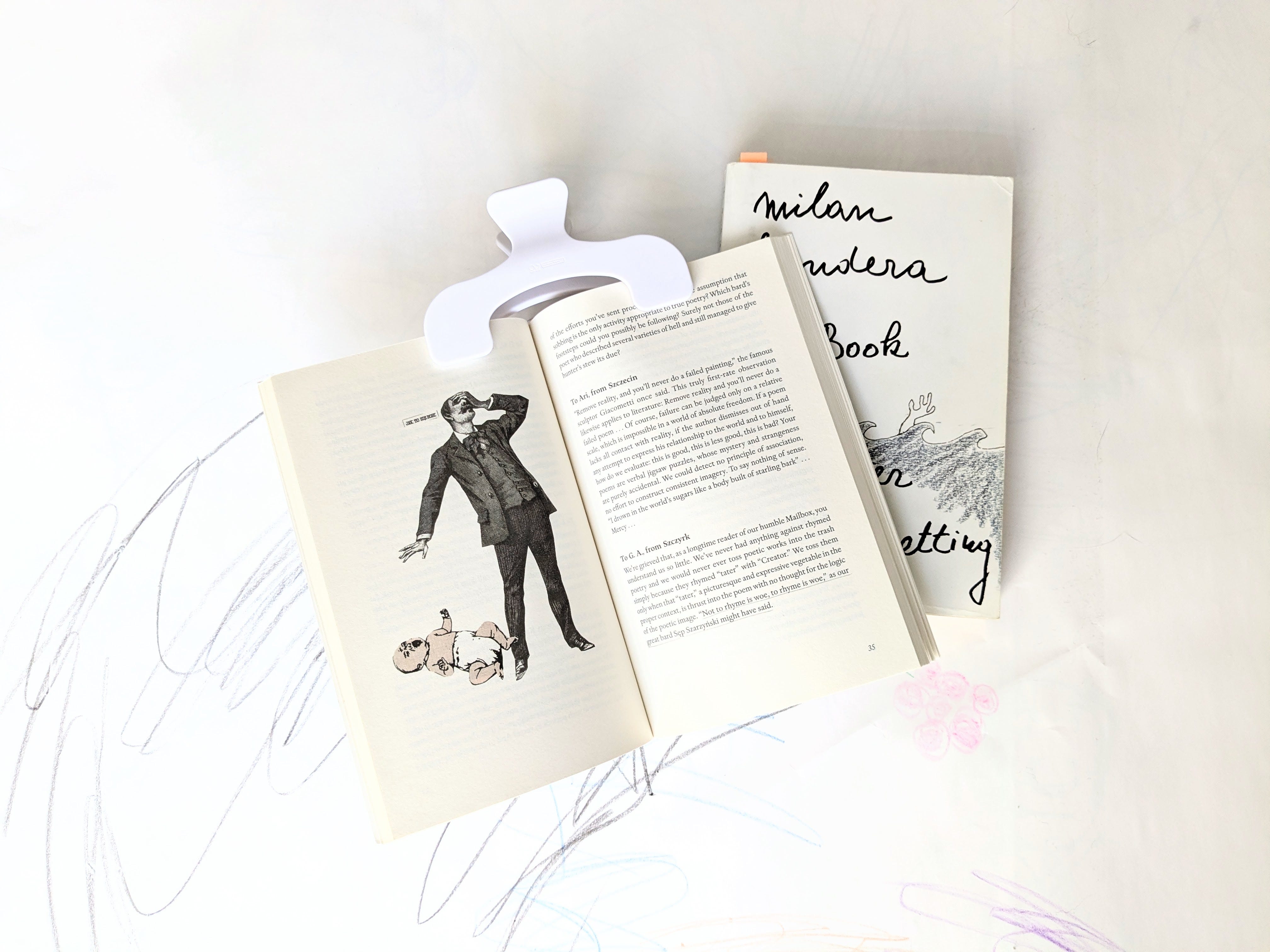
I find that distinction between private and public writing also in Milan Kundera’s The Book of Laughter and Forgetting (a section that haunts me as much as Szymborska’s remarks even though I’ve never driven a cab or Uber). I give you the whole troubling section of the novel below:
Some time ago, I went across Paris in a taxi with a garrulous driver. He couldn’t sleep nights. He had chronic insomnia. Had it ever since the war. He was a sailor. His ship sank. He swam three days and three nights. Then he was rescued. He spent several months between life and death. He recovered, but he had lost the ability to sleep.
“I’ve had a third more of life than you,” he said, smiling.
“And what do you do with that extra third?” I asked him.
“I write.”
I asked him what he was writing.
He was writing his life story. The story of a man who swam in the sea for three days and three nights, who had struggled against death, who had lost the ability to sleep but kept the strength to live.
“Are you writing it for your children? As a family chronicle?”
He chuckled bitterly: “For my children? They’re not interested in that. I’m writing a book. I think it could help a lot of people.”
That conversation with the taxi driver suddenly made clear to me the essence of the writer’s occupation. We write books because our children aren’t interested in us. We address ourselves to an anonymous world because our wives plug their ears when we speak to them.
You might say that the taxi driver is not a writer but a graphomaniac. So we need to be precise about our concepts. A woman who writes her lover four letters a day is not a graphomaniac. She is a lover. But my friend who makes photocopies of his love letters to publish them someday is a graphomaniac. Graphomania is not a mania to write letters, personal diaries, or family chronicles (to write for oneself or one’s close relations) but a mania to write books (to have a public of unknown readers). In that sense, the taxi driver and Goethe share the same passion. What distinguishes Goethe from the taxi driver is not a difference in passions but one passion’s different results.
Graphomania (a mania for writing books) inevitably takes on epidemic proportions when a society develops to the point of creating three basic conditions:
(1) an elevated level of general well-being, which allows people to devote themselves to useless activities;
(2) a high degree of social atomization and, as a consequence, a general isolation of individuals;
(3) the absence of dramatic social changes in the nation’s internal life. (From this point of view, it seems to me symptomatic that in France, where practically nothing happens, the percentage of writers is twenty-one times higher than in Israel. Bibi is, moreover, right to say that looked at from the outside, she hasn’t experienced anything. The mainspring that drives her to write is just that absence of vital content, that void.)
But by a backlash, the effect affects the cause. General isolation breeds graphomania, and generalized graphomania in turn intensifies and worsens isolation. The invention of printing formerly enabled people to understand one another. In the era of universal graphomania, the writing of books has an opposite meaning: everyone surrounded by his own words as by a wall of mirrors, which allows no voice to filter through from outside.
What to make of Kundera’s theory? I’m moved by the ending of the passage, in which graphomania figures as a symptom of a generalized expansive loneliness. But his interpretation of the history of print culture I find much less convincing. Did the invention of print simply enable people to understand one another before graphomania sprang from their lonely heads like Athena’s opposite, like obsession in place of wisdom? Those hunted down by witchfinders waving Malleaus maleficarum at them would beg to differ. Humanity has always been magnificently skilled at the varied arts of misunderstanding, and print has always had a relationship to power.
And yet the link between the desire for publication and deep loneliness makes me wonder: is there a coldness, a dispassion that belies the notion of compulsion as the driver of writing, that differentiates the true writer from the graphomaniac?
Or is the difference one of community? The graphomaniac appeals to a higher power — a literary Parnassus embodied in whatever their era’s best known route to publication is rumored to be, bypassing the private dimension of writing, the writing’s incubation and exchange among friends. There’s a dream of being discovered that animates and shapes the graphomaniac’s project. Validation as cure for friendlessness; writing as a vehicle for the desired recognition of the writer. I’m trying to think through what Kundera proposes — I actually don’t know that I believe in these propositions myself.
And to be honest, the most fascinating literary graphomaniac I can think of has nothing to do with Central or Eastern Europe and isn’t labeled a graphomaniac by anyone on the pages of her book. It’s Elizabeth Taylor’s Angel. Judging by subtle hints from her other novels, Taylor breathed into Angel a very intimate fear of graphomania: a fear that graphomania is to the graphomaniac completely indiscernible from sophisticated writing, and that it stands between the graphomaniac and true literature, making the graphomaniac an exile who does not understand her exile. That would be a meta-level to the novel, and maybe even my imposition as a reader. Because in Angel’s case, the delusion is a protective mantle. Ridiculous as she might seem to those around her — and to the reader — Angel’s envelopment in her delusions of grandeur allows her to persevere as a writer and reach for goals from which she would have otherwise disqualified herself from the outset.
There is no better alternative for Angel than the life she creates, carried by her blind faith in her talent and her own worth. There is no truer literature available to her, and no genuine love waiting in the wings. Without graphomaniac zeal, what is there for her? Taking over her mother’s shop, living out her days as a shopkeeper, with some sort of a shopkeeper husband? These are not Angel’s dreams. Graphomania affords her a separation of the self from her circumstances.
Her situation reminds me of a psychological problem I’ve struggled to understand since having it explained to me by a psychologist many years ago. For unloved children, the delusion of the parents’ love created by the children’s developing psyche despite and against evidence is what makes growing up possible. To shed delusions, you need to live long enough to mature. But then, to accept one’s own role in perpetuating that protective delusion takes a yet different kind of maturity. Who could possibly be expected to be that mature, I wonder. All that maturity seems like ladders upon ladders climbing up onto ever higher levels of self-awareness. And at the top of the precarious structure of ladders I picture a fragile swaying subject of their own disillusionment. When we leave Angel, she is an elderly woman surrounded by decay and kitsch, but impervious to both, an eternal child in that sense. There is no maturation for her, only a sense of merely “living out” a life. In the world of the novel, which mostly corresponds to Angel’s mental model of her small world, with small departures into others’ true thoughts about her, there seems to be no path toward maturity — only a path to disenchantment. To live, it seems, Angel must hold on to her own vision against the evidence of reality. Yet on the meta-level, that which does not exist for Angel, and in not existing allows her to write, runs through the novel as a subcutaneous anxiety, not named as “graphomania” and “kitsch.” The act of naming, I’d argue, would be wrong. It would separate Taylor and the reader from Angel through a false sense of safety.
Kitsch as a term, like graphomania, seems to be a Central-Eastern European obsession. Kitsch is the assumed quality of a graphomaniac’s output: familiar in its appearance because it is completely derivative, yet unrecognized by its author for what it is. Meditation on kitsch occupies a prominent place in Kundera’s The Unbearable Lightness of Being; Dubravka Ugrešić explores kitsch in multiple books from multiple angles: as the putrid heart of nationalist aesthetics, as the demonic aspect of nostalgia, as a literary possibility and creative trap; in Ostatnie historie, one of Tokarczuk’s as yet untranslated novels, one of the characters devotes his life to an academic study of kitsch. Maybe kitsch is the dark matter in a certain literature whose writers tremble at the thought of being accused of graphomania?
In the era of poptimism — a term I struggle to understand much like the psychological problem of fundamental disillusionment and self-forgiveness for delusion — is there kitsch? In the societal conditions Kundera tried to define as he wrote about the cab driver — are there graphomaniacs? As I was grappling with this draft, I came upon a note by András Kiséry that offers an ironic postscript to Kundera’s theory through Franco Moretti’s line: “a continent that falls in love with Milan Kundera deserves to end like Atlantis.” Milan, meet Angel.
That’s it, friends. II have no other conclusion than to wonder whether graphomania is a self-inflicted wound. Maybe the only sane thing to do is never to write. Liberation through video content, obviously.
I don't know much about graphomania, but "kitsch" was a favorite term growing up in Germany. It's interesting to see the two discussed together
Excellent reflecions.Thank you Milena.